
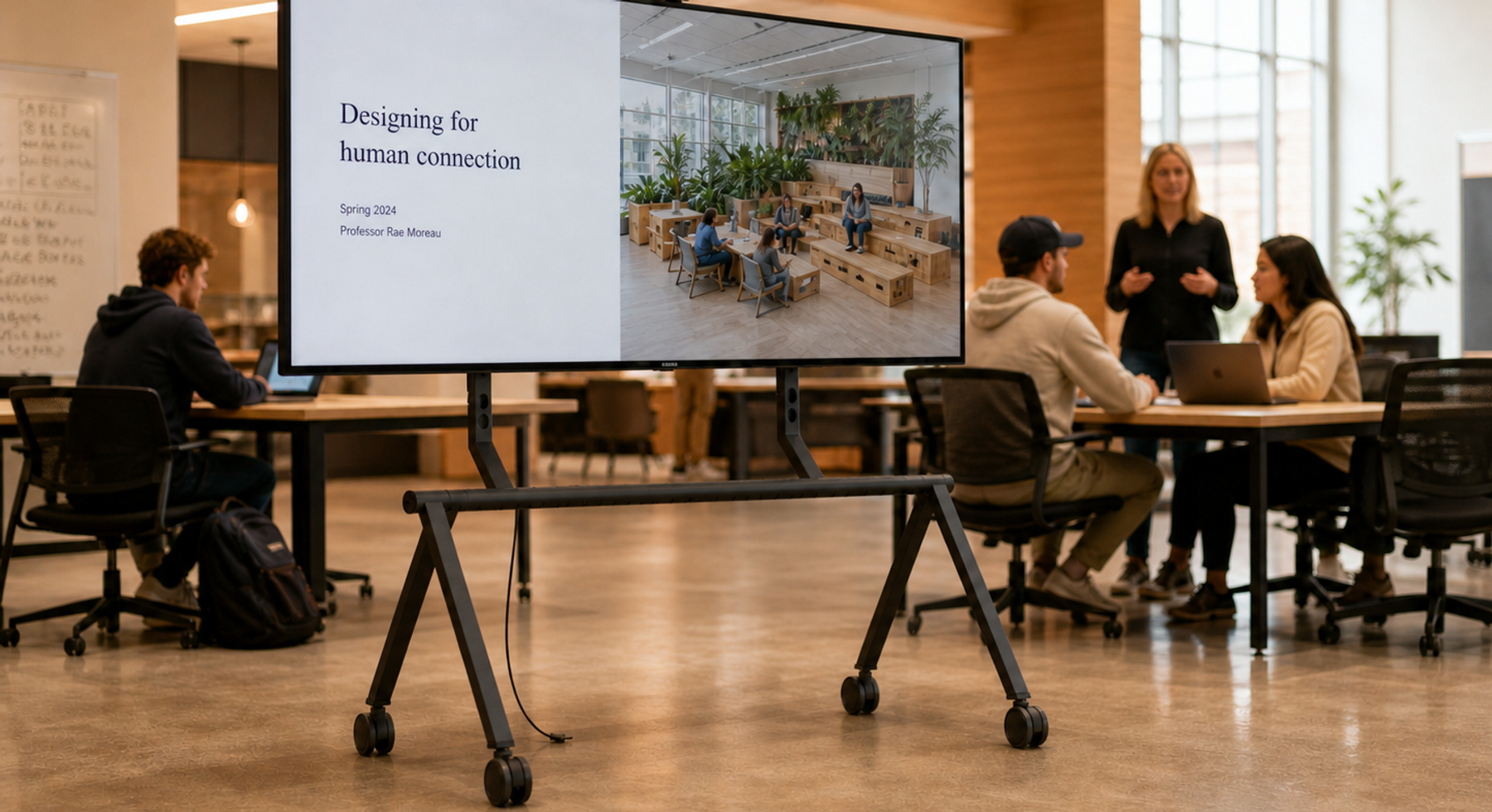
The Campus Isn’t a Collection of Rooms Anymore
The way higher education thinks about AV has changed.
It used to be room-by-room. One classroom, one install. Fixed projection. Fixed mounts. Refresh cycles handled department by department.
That model is fading.
Today, campuses are thinking in systems. One standard. Every room. Every building. One reference design. One procurement path. One support model.
As the source blog notes, higher education AV is shifting away from isolated spaces and toward an enterprise view of the entire campus.
That shift matters. Because when the campus becomes the unit—not the individual room—the physical layer has to work differently.
The display stand is no longer just something that holds a screen.
It becomes part of the campus standard.
Fixed Infrastructure Has a Limit
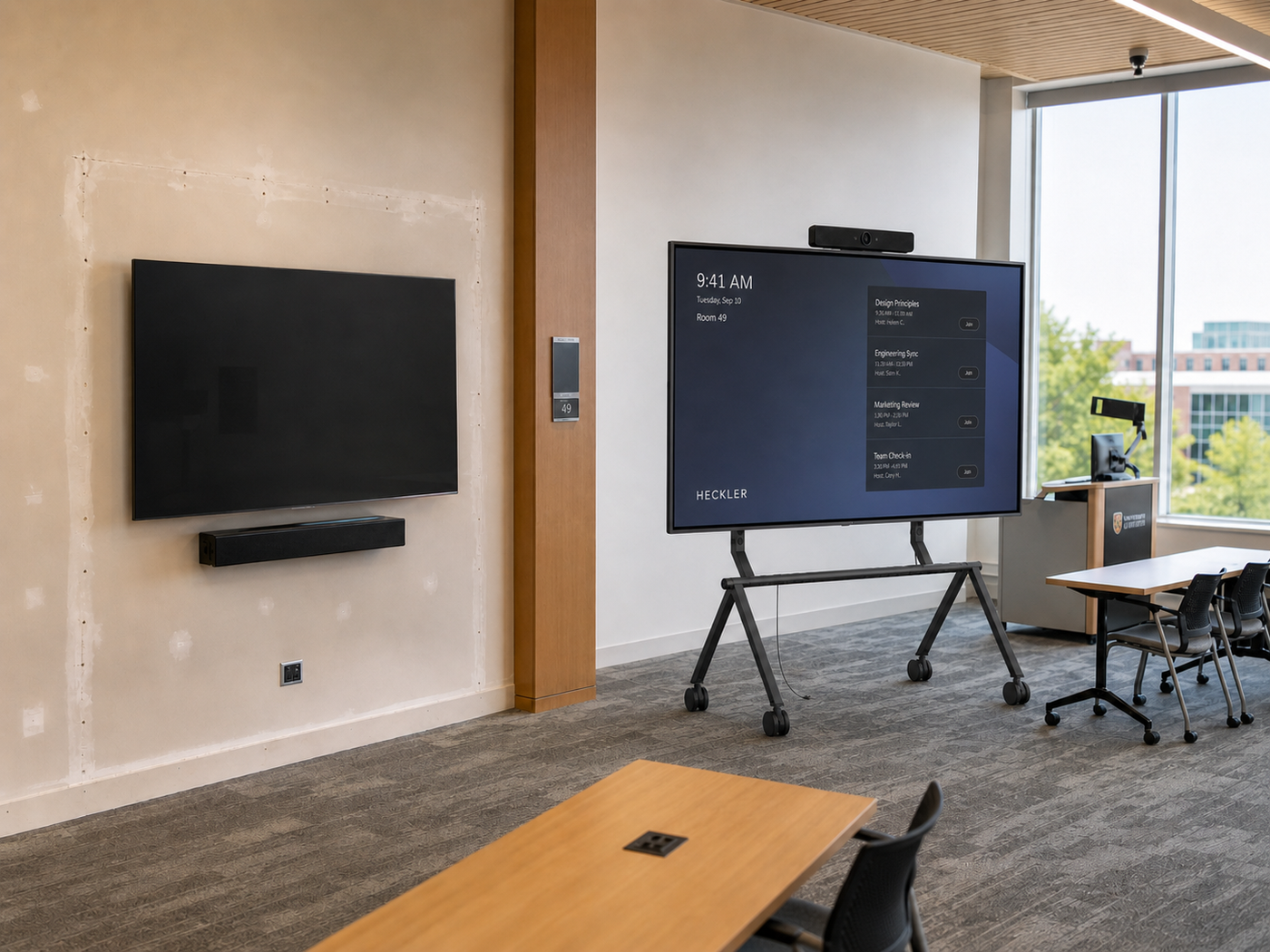
A wall-mounted display makes sense when a room’s purpose is permanent.
But campus rooms rarely stay permanent.
A seminar room becomes a hybrid collaboration space. A training room becomes an overflow classroom. A multipurpose space needs to support lectures one week, events the next, and video meetings after that.
A fixed mount can’t easily respond to those changes.
The display comes down. The bracket gets removed. The wall gets patched. The next room gets scheduled. The work repeats.
At one room, that’s a project.
Across a campus, it becomes a program.
That’s where mobile display infrastructure starts to make more sense. Not as a compromise, but as a better match for how higher education spaces are actually being used.
Mobility Only Matters If It Feels Confident
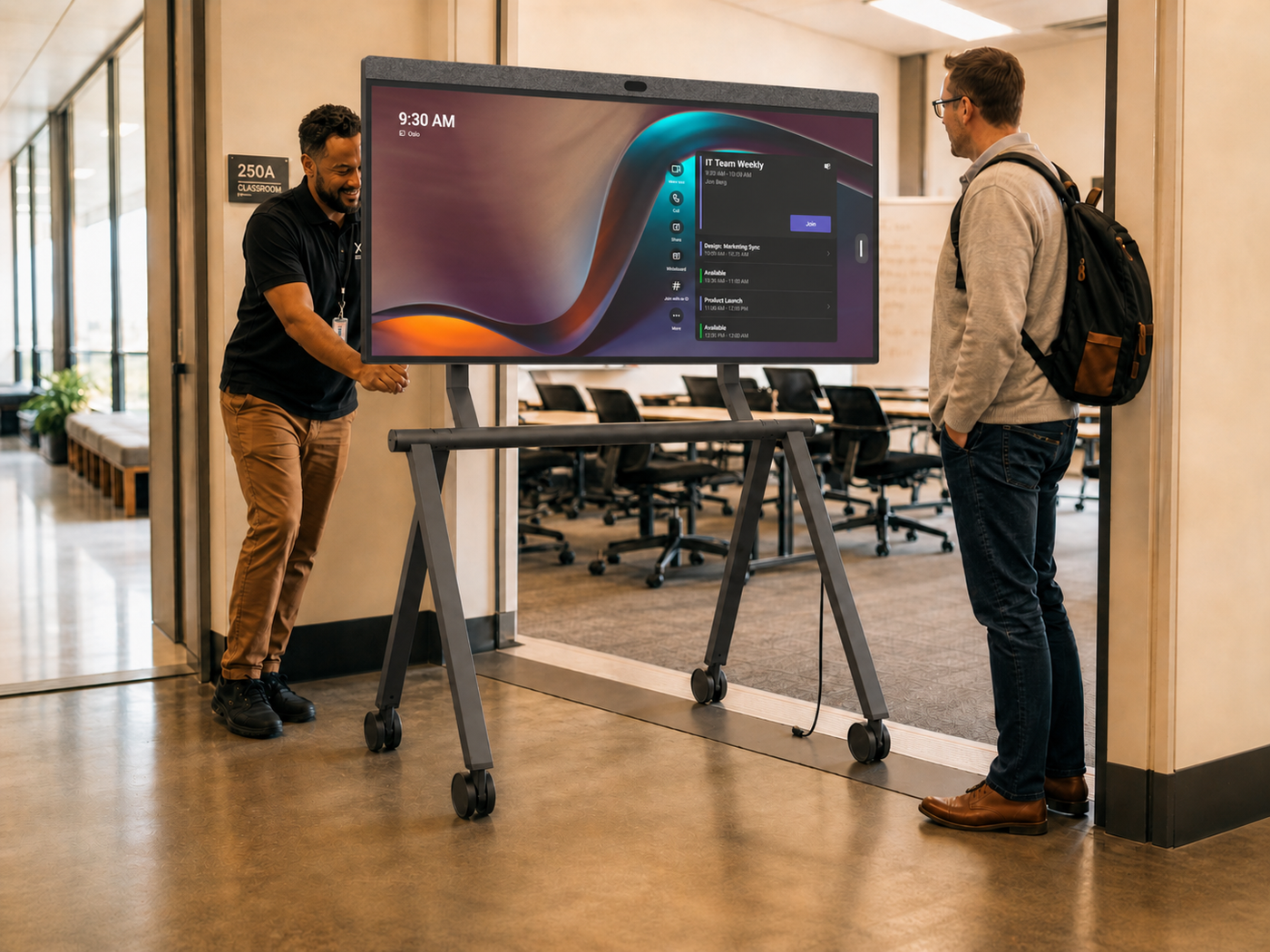
A rolling stand has to do two things well.
It has to move easily.
And once it gets there, it has to feel planted.
That sounds simple, but it’s where a lot of mobile display solutions fall short. If the stand is hard to move, facilities teams avoid moving it. If it moves easily but feels unstable in the room, instructors lose confidence in it.
Heckler XL Display Stand MkII is built around that exact balance.
It supports large-format displays—82–98 inch 16:9 displays and 85–105 inch 21:9 displays—up to 220 pounds, with VESA support from 400 through 1600.
That gives campuses one clean standard for today’s larger displays, including the ultrawide formats increasingly used in collaboration and hybrid learning environments.
And because MkII uses oversized five-inch twin-wheel total-lock casters, it can roll across real campus environments: thresholds, mixed flooring, hallways, classrooms, and shared spaces. Once positioned, the total-lock braking system locks both wheel spin and caster pivot.
That’s the difference between “technically mobile” and actually useful.
Standardization Has to Include the Physical Experience
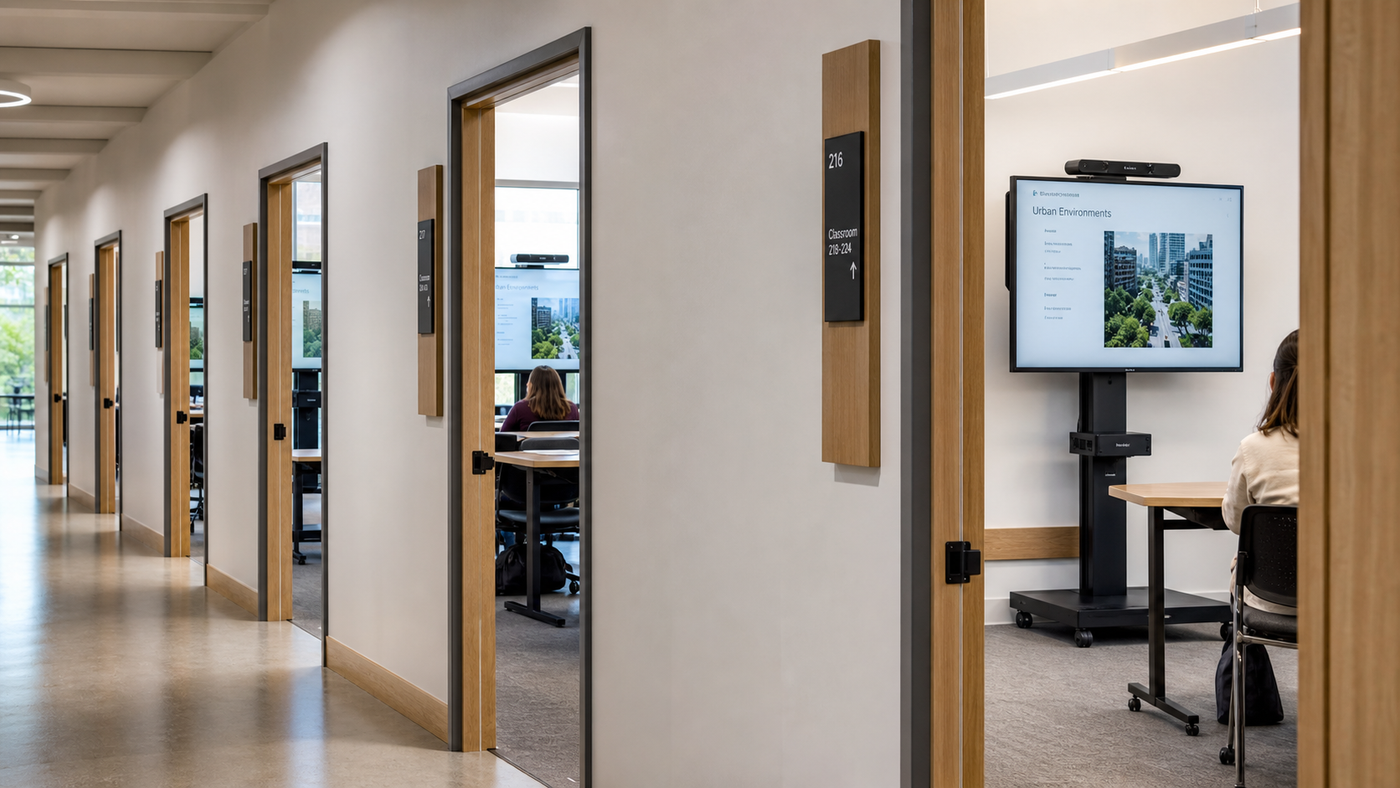
Campuses already understand the value of standardizing technology.
Same display. Same compute. Same control experience. Same support model.
But the physical layer often gets treated as secondary.
That’s where inconsistency creeps in.
One room has a different display height. Another has different cable routing. Another has a stand that looks temporary. Another has a fixed mount that limits future flexibility.
Same platform. Different experience.
XL Display Stand MkII helps close that gap by making the physical layer repeatable.
The product uses Heckler’s patent-pending Connection System with set-screw locking, larger rectangular steel box-beam legs and columns, and a one-piece structural beam to create a more rigid stand than its predecessor.
For a campus AV team, that matters because repeatability is the standard.
The first room should feel like the fiftieth.
The fiftieth should feel like the hundredth.
The Details Matter at Scale
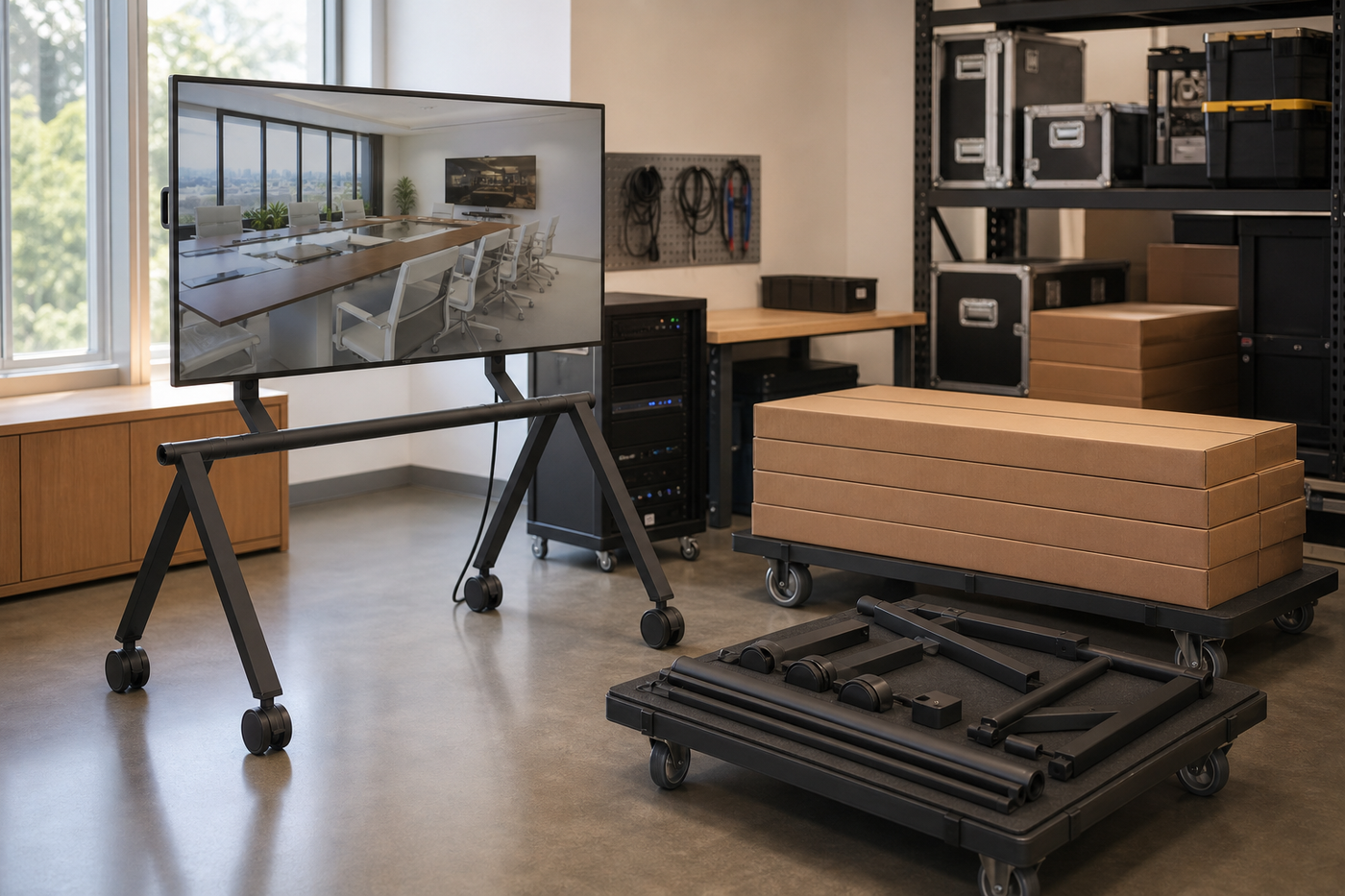
At campus scale, small details become operational costs.
How long does it take to assemble?
How cleanly does it cable?
How much space does it take to store?
How many ship on a pallet?
Can facilities teams deploy it without turning every move into a construction project?
XL Display Stand MkII is designed for that reality. It includes cord wraps and cable routing accessories that mount along the beam, so cable management can be adapted cleanly by room or deployment.
It also packs down into a compact flat-pack bundle, ships via small-package carriers, and supports up to 40 units per freight pallet for fleet-scale deployments.
That isn’t just packaging trivia.
That’s the kind of thing that affects lead times, storage, rollout planning, and total deployment cost.
For higher education, the ideal standard is not just the one that looks good in the room.
It’s the one that’s easier to receive, store, assemble, move, support, and redeploy.
Compliance Shouldn’t Slow the Program Down

Higher education procurement lives in a real compliance environment.
ADA matters.
TAA matters.
UL listing matters.
Domestic manufacturing can matter.
And those details don’t just matter during the first purchase. They matter through committee review, procurement approval, documentation, and multi-year refresh planning.
XL Display Stand MkII is TAA compliant, UL/IEC 62368-1 listed, ADA compliant, and designed and manufactured in Phoenix, Arizona.
For campus AV and procurement teams, that removes friction.
The stand doesn’t just support the display.
It supports the approval path.
The Physical Layer Is Part of the Campus Standard
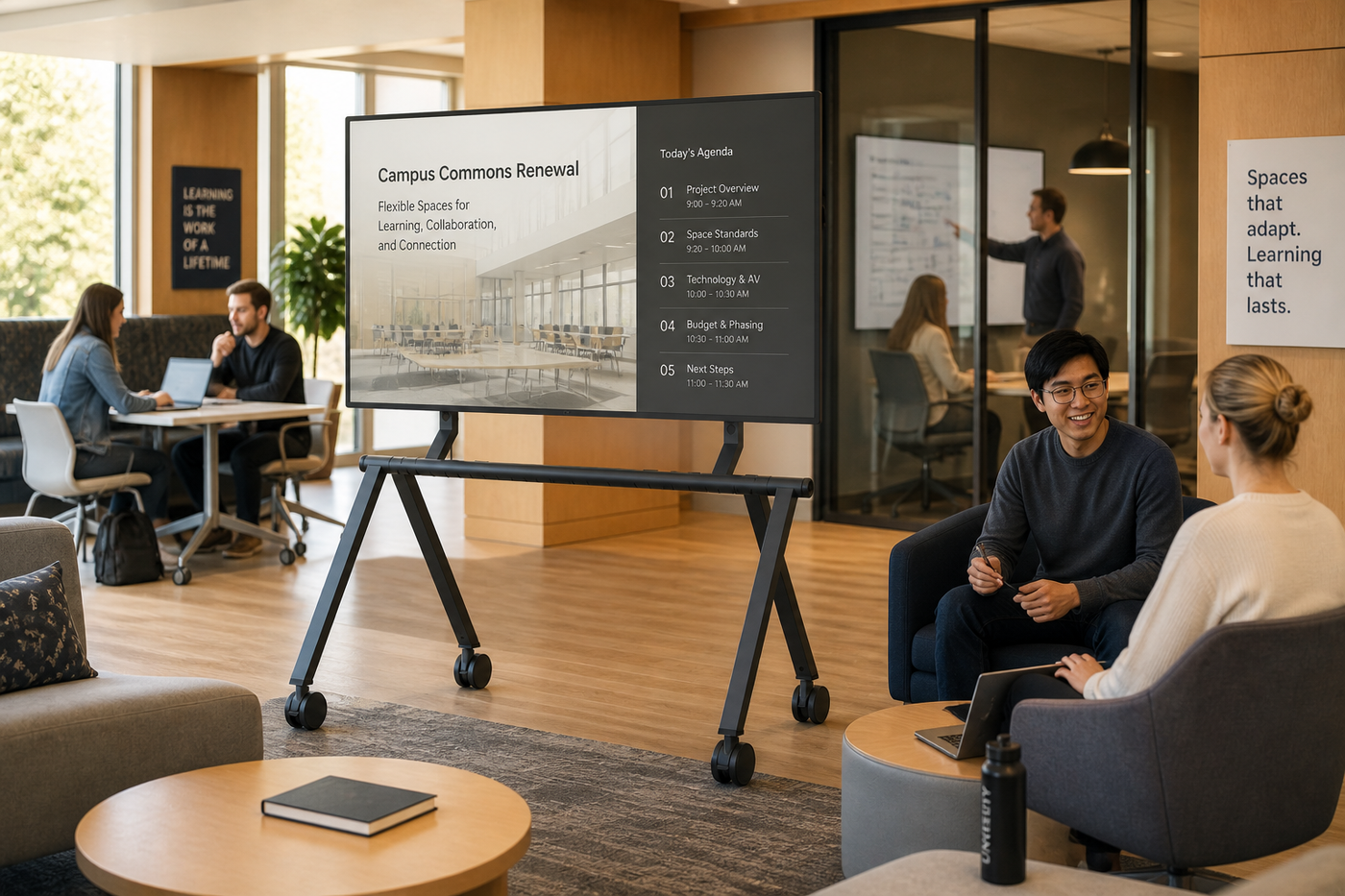
The future of higher education AV is not just about conferencing platforms, cameras, microphones, and collaboration software.
It’s also about what stays in the room after the technology changes.
Displays will change.
Video platforms will evolve.
Room use will continue shifting.
The physical infrastructure has to be ready for that.
That’s why XL Display Stand MkII fits so naturally into the modern campus AV conversation. It gives institutions a way to standardize large-display mobility without sacrificing stability, appearance, cable management, compliance, or deployment efficiency.
It turns the display into a flexible campus asset.
Not a fixed room decision.
And for campuses thinking in systems, that distinction matters.
Specify the Physical Layer Accordingly
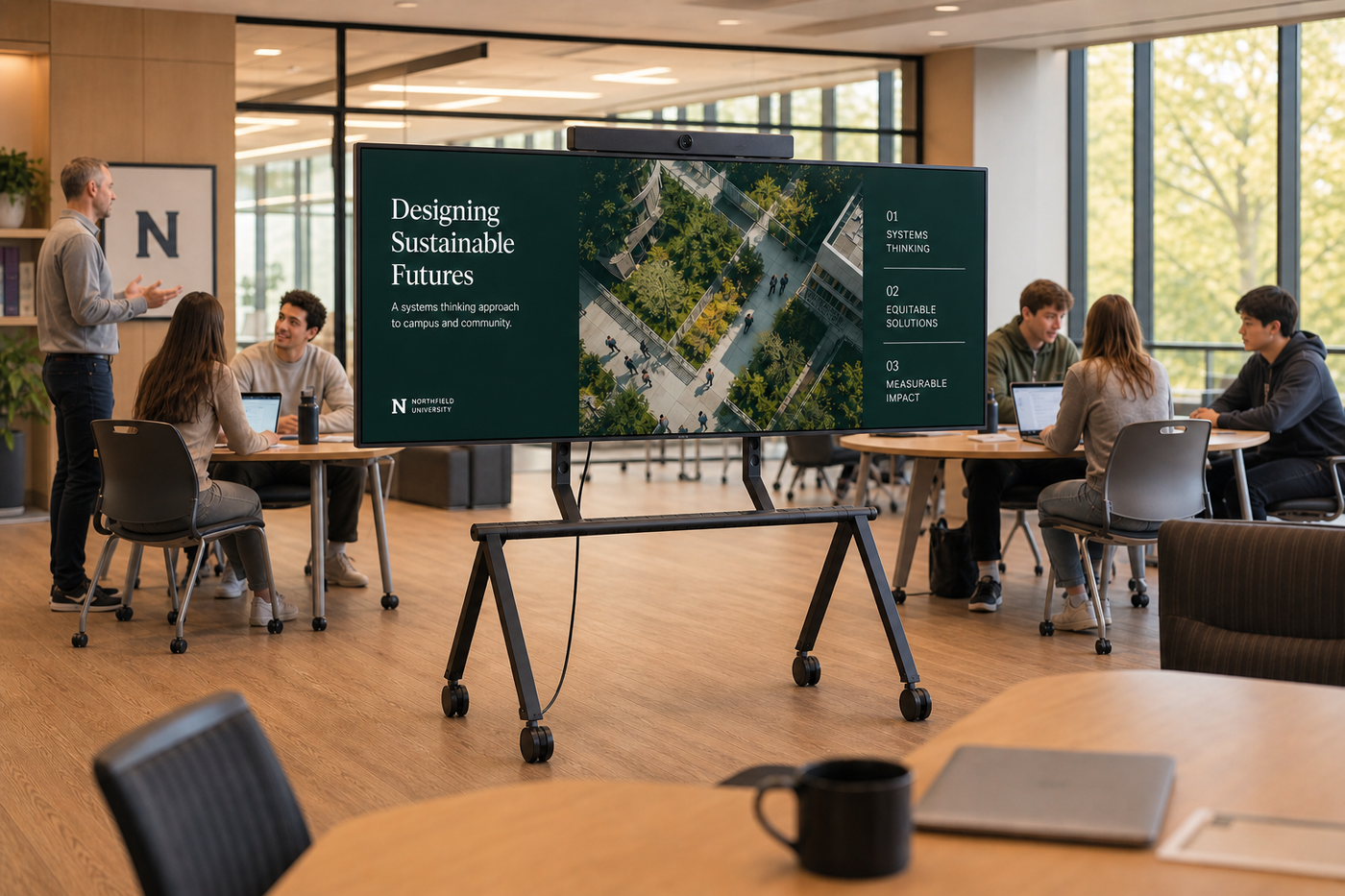
The campus AV standard has expanded beyond the classroom.
The infrastructure should expand with it.
For institutions building flexible, repeatable, campus-wide AV environments, Heckler XL Display Stand MkII gives the physical layer the same level of intention as the technology stack.
Explore Heckler XL Display Stand MkII and the full Heckler product line at heckler.com.
For spec sheets, CAD files, or deployment questions, reach our client success team at service@hecklerdesign.com