
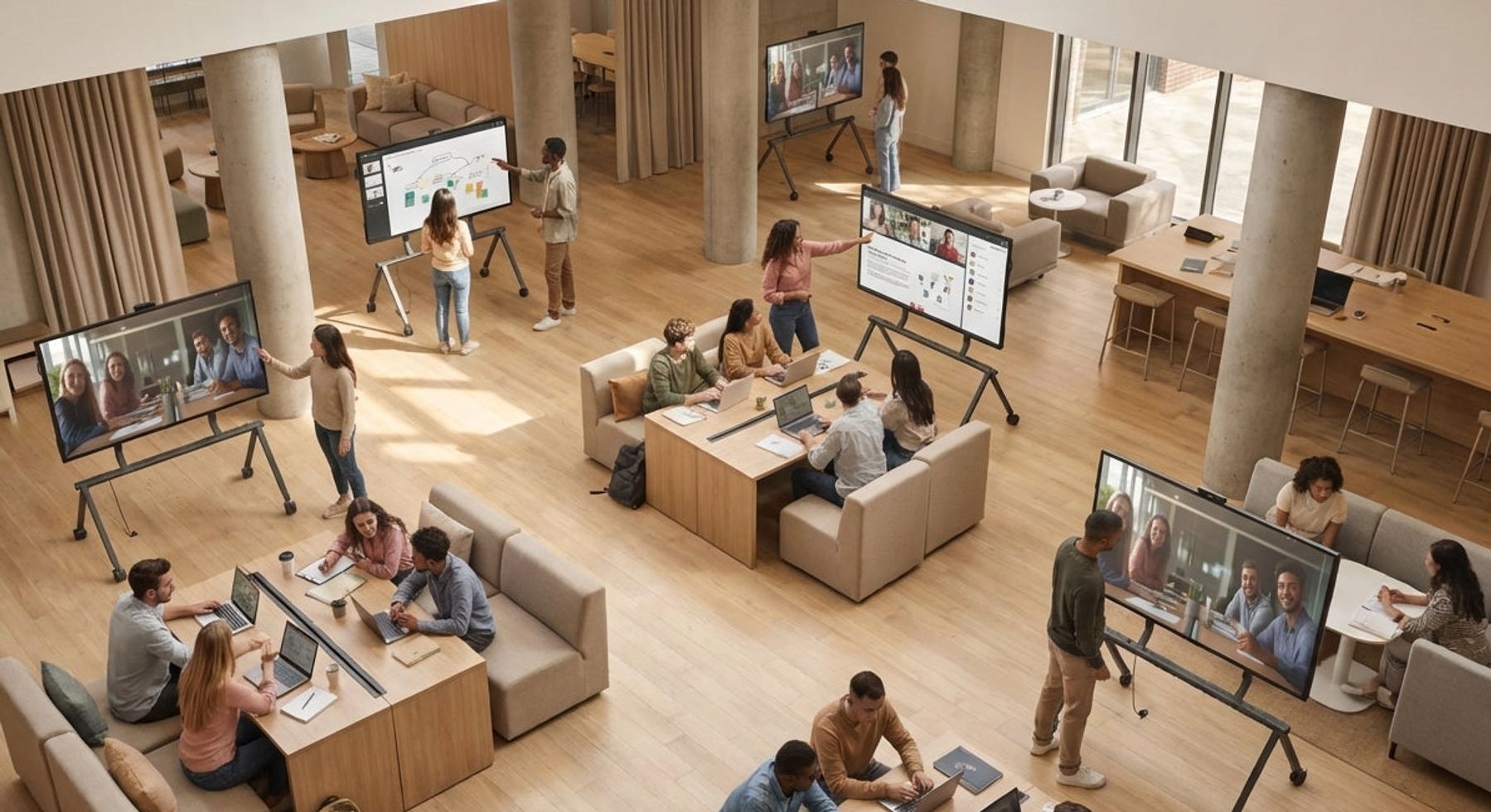
The Missing Layer in Enterprise AV Standardization
Enterprise AV standardization isn’t a talking point anymore.
It’s an operational requirement.
Organizations aren’t asking if they should standardize—they’re asking how to do it across 50, 100, even 200 locations without everything drifting off course halfway through.
Most of the industry’s attention has gone to the technology layer. Cameras, codecs, platforms, remote management. All important.
But there’s a quieter layer underneath it all that doesn’t get nearly enough attention.
The physical hardware.
The mounts, the stands, the structural systems that determine where a display actually lives in the room.
Because when that layer isn’t consistent, everything above it starts to break down.
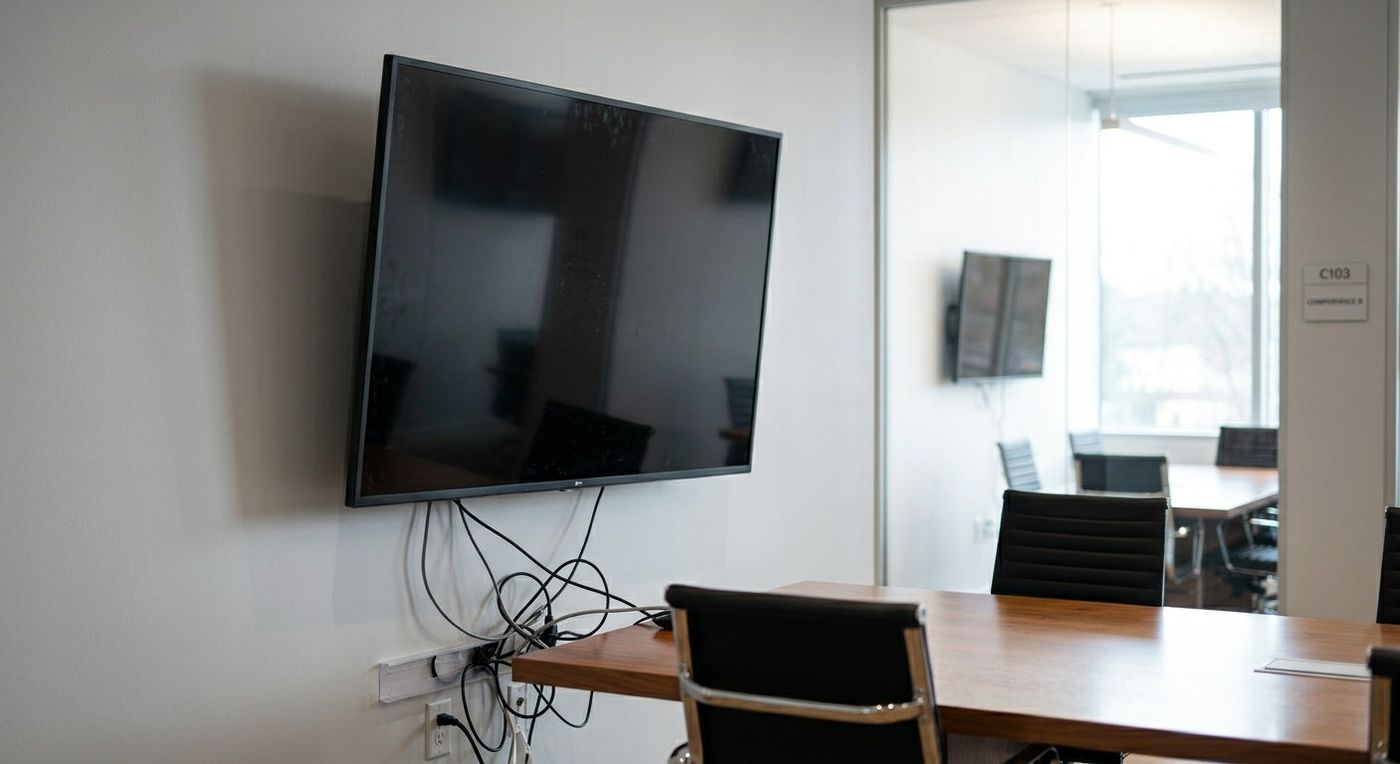
Two rooms can run identical platforms and still feel completely different—just because one display is twelve inches lower, or slightly off-axis.
The Industry Knows the Direction. It’s Still Catching Up on the Details.
There’s no question where things are headed.
Enterprise AV is moving toward managed models. Defined standards. Predictable outcomes. The same level of governance that already exists for networking and cloud infrastructure.
That shift changes the expectation.
It’s no longer enough to deploy rooms that work. They have to perform consistently, scale cleanly, and hold up across an entire portfolio.
And that’s where the conversation usually stops a little short.
Because while we’ve gotten very good at standardizing platforms…
We haven’t fully standardized what sits underneath them.
The Gap Lives Below the Screen
Most standardization conversations focus on what’s happening on the display.
Platform selection. Remote monitoring. AI-driven management.
But the most common point of variation isn’t software.
It’s physical positioning.
Where does the display actually land? Is it centered? Is it aligned to sightlines? Is it installed the same way in every room?
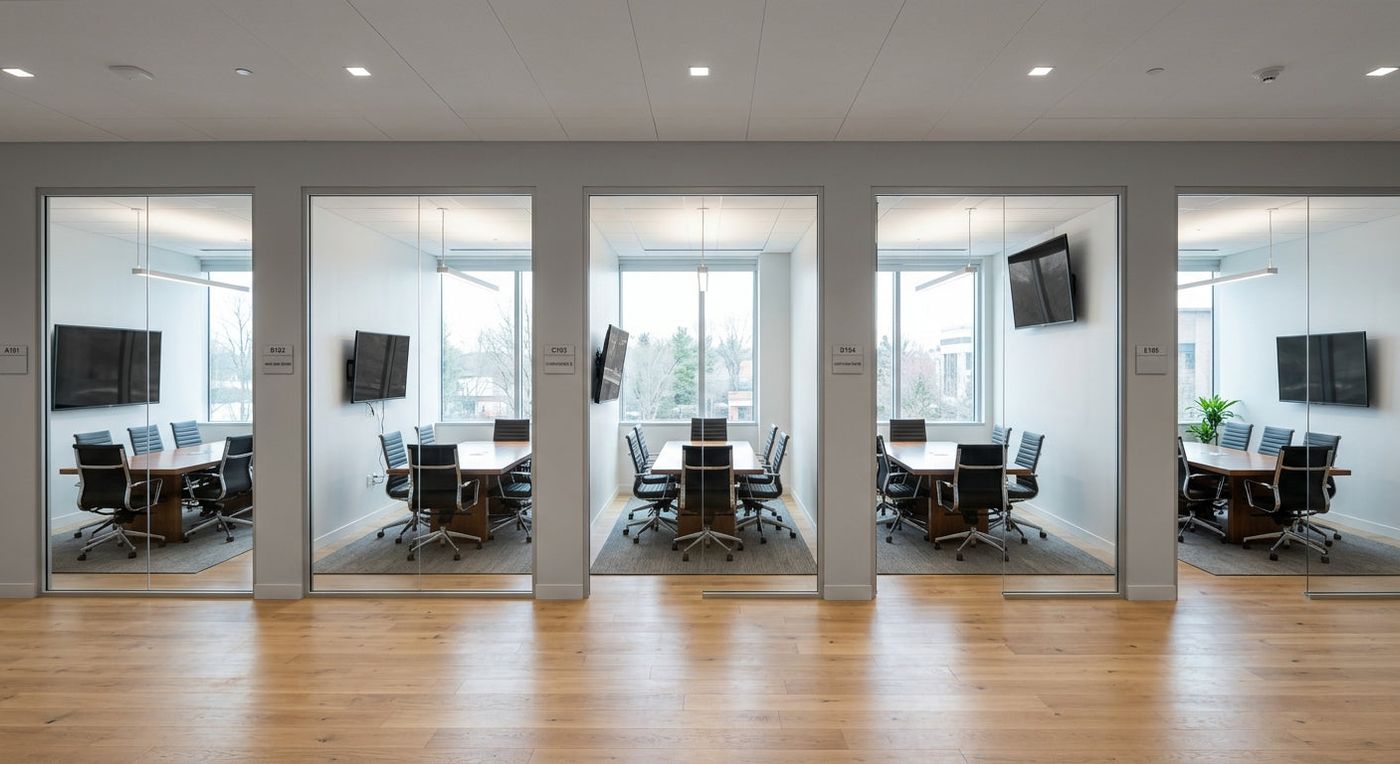
These decisions don’t seem big in isolation. But they compound.
Room by room, install by install, small variations start to stack. What began as a standard turns into a collection of approximations.
Not because anyone did anything wrong.
Because the hardware required interpretation.
Repeatability Has to Be Engineered In
If you want consistency at scale, you can’t rely on judgment in the field.
You have to design for repeatability.
That means hardware that removes decisions instead of introducing them. Systems that align themselves. Assemblies that don’t depend on installer preference or experience level.
When a structure self-aligns as it’s assembled, when joints tension into place without guesswork, when the same tool produces the same result every time—you start to eliminate the variability that shows up across large deployments.
At that point, the outcome stops depending on who installed it.
It starts depending on the system itself.
What That Looks Like in Practice
Take a large-format display deployment.
Across dozens of rooms, you need the same result every time:
- Consistent display height
- Clean alignment
- Predictable camera positioning
- No custom brackets or field improvisation
That only happens when the system is defined tightly enough that it can’t drift.

A fixed set of parameters—load capacity, VESA range, adjustment increments, standard display height—turns what could be a flexible install into a repeatable one.
Now the display doesn’t just “look right.”
It lands in the same place, every time.
Eliminating the Small Decisions That Break Scale
The same principle applies to everything around the display.
Where does the compute live? Where do cables terminate? How is power handled?
If those decisions are left open, they get solved differently in every room.
If they’re defined in the system, they get solved once—and repeated.
That’s the difference between a deployment that scales cleanly and one that slowly drifts out of alignment.
Logistics Is Part of the System Too
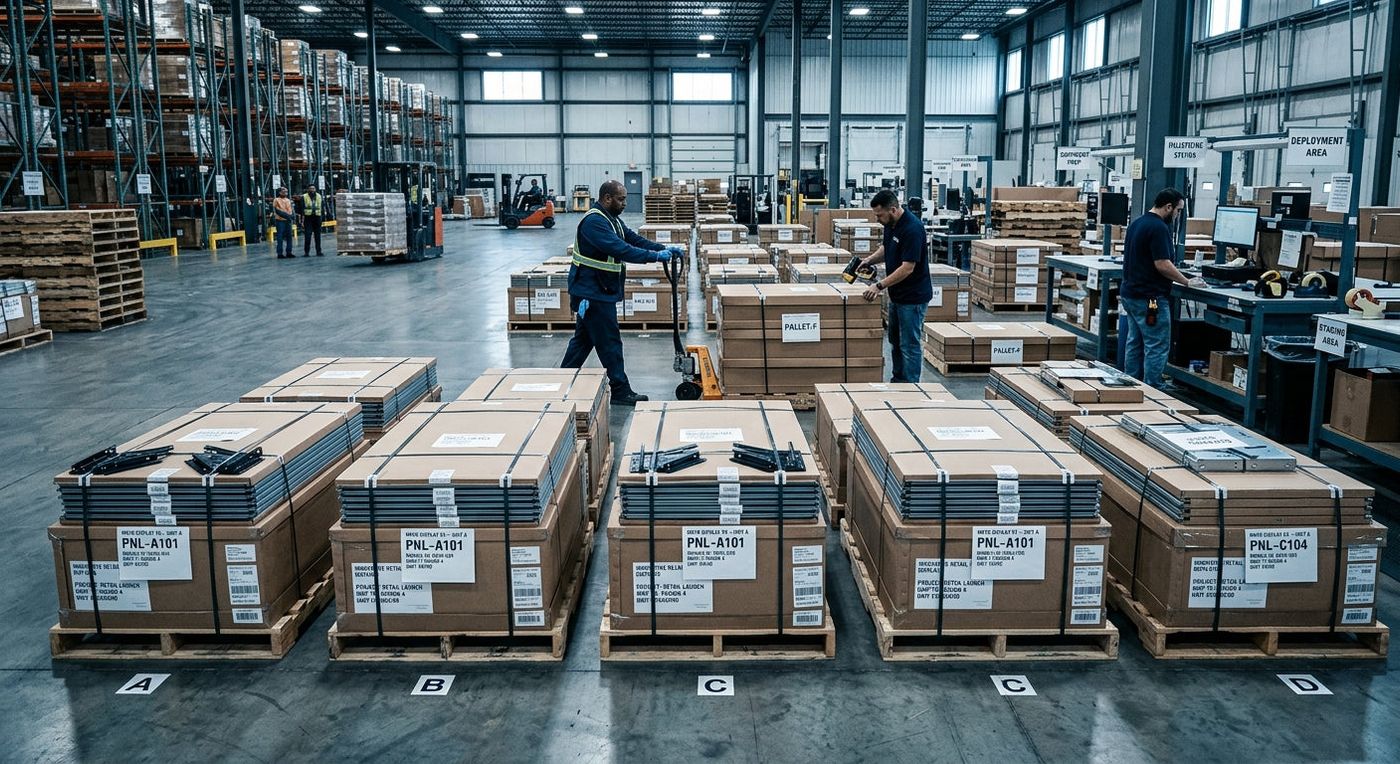
At smaller scale, shipping and staging are details.
At enterprise scale, they’re operational constraints.
How hardware is packaged, how many units fit on a pallet, how it stages on-site, how quickly it can be assembled—these all affect the timeline and cost of a rollout.
A system that ships compactly, stores efficiently, and assembles without specialized tools isn’t just easier to install.
It’s easier to deploy across an entire portfolio.
Compliance Sets the Floor
There’s also a baseline that can’t be negotiated.
TAA compliance. UL or IEC listing. ADA requirements.
In enterprise, government, and higher education environments, these aren’t features. They’re entry conditions.
If the hardware doesn’t meet them, it doesn’t get specified.
Which means they need to be accounted for from the beginning—not addressed later as a checkbox exercise.
Where Standards Actually Hold
The real test of a standard isn’t room one.
It’s room fifty.
That’s where inconsistencies show up. That’s where small variations become noticeable. That’s where the difference between a defined system and a loosely guided install becomes clear.
When the hardware layer is engineered for repeatability, something important happens.
The system holds.
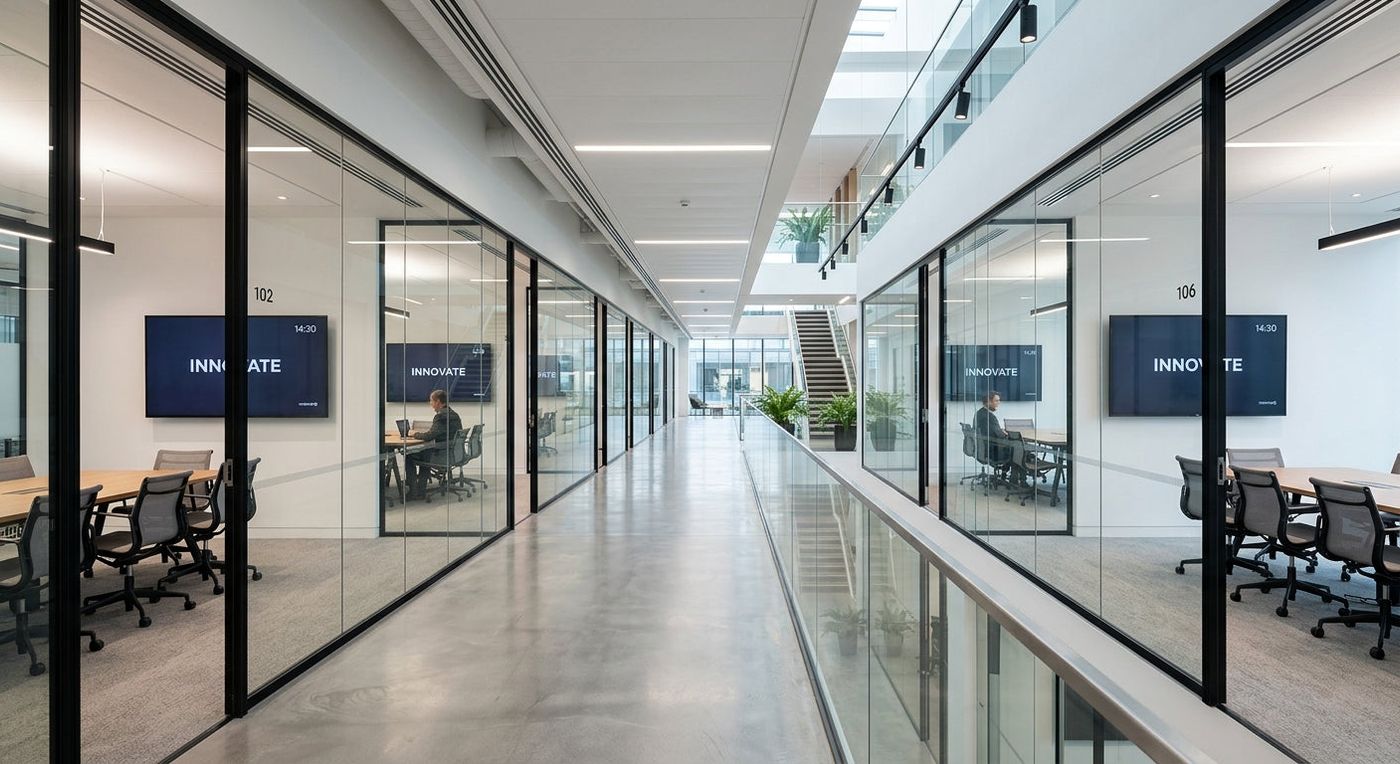
Display height doesn’t drift. Alignment doesn’t vary. Install quality doesn’t depend on who was on-site that day.
It just… repeats.
The Bottom Line
Enterprise AV standardization isn’t just about software, platforms, or management layers.
It’s about whether the physical system underneath can deliver the same result, over and over again.
Because if that layer isn’t consistent, nothing above it can fully compensate.
And if it is—
Everything else gets easier to standardize.
Explore the full Heckler product line at heckler.com.
If you want, I can next:
- Convert this into a LinkedIn post with your ISE-style structure
- Or build a talking head script + b-roll plan for this one too